Applying for Medicine
Applying for Medicine is a considerable undertaking. You will need to ensure you meet the requirements by choosing the correct areas of A level study, at the end of Year 11. Likewise, you will need to demonstrate you are the type of person with both academic rigour and the ability to work well in a care setting. You will need to work effectively through Year 12 to be ready to send your application in early October of Year 13.
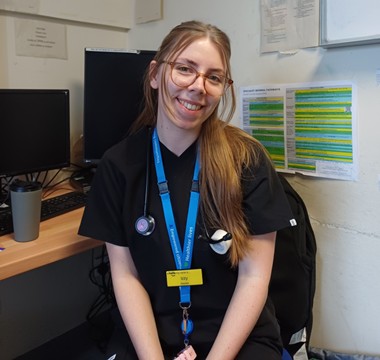
Graduate of the BFS Aim High Programme
Foundation Year 1 Doctor - Acute Medicine
Dorset County Hospital NHS Foundation Trust
Key Things to Consider
- Academic Outcomes Matter
- Most UK medical schools require strong GCSE grades in English, Maths and Sciences. Many schools set minimum grades. Even if you are undecided, in Year 11, aim for excellent outcomes in all your subjects. Beyond this, start looking at the A level entry requirements before you finalise your application to Sixth Form. The university websites will list subject requirements, and you should ensure you can achieve outcomes of A or A* grades in all the A level subjects you choose. Most medicine courses will have a requirement of Chemistry and one other Science or Maths. That being said, Bristol Free School have had successful applicants who have done subjects like Spanish, French, English Literature or Geography, alongside sciences. Play to your strengths. When in Year 13, ensure you utilise independent study time effectively and talk to teachers if you are worried about achieving in key aspects of your course. The Aim High Programme offers advice, if you are unsure, you are picking the right A levels for an application to medical school.
Super Curricular Activities and Work Experience
Medical courses look for students who can demonstrate knowledge and passion for their chosen subject. You need to show evidence of engaging with medicine on a wider level than your studies. Wider reading, online lectures, MOOCs (Massive Online Open Courses), and competitions will give you instances where you can highlight that you are involved with your subject on a deeper level.
You should also consider getting work experience in the care sector. This can seem daunting and tricky – most institutions have limited spaces for work experience. Start by searching for volunteering positions at care homes, then broaden out by getting in contact with surgeries or hospitals (these will often list opportunities on their website). Successful applicants have had a myriad of work experience – from working as a receptionist in a GP clinic to shadowing doctors in hospitals: what matters is that you reflect on what you learn from your experiences.
Strong Personal Statement
Your personal statement should reflect what motivates you to study your subject and include examples that show your knowledge of how elements of your subject interconnect and reflect your development as a student. You should explain what you’ve learned from any relevant experience but also avoid repeating unsubstantiated statements.
Entrance Exams
The current entrance exam, required by universities running medicine courses, is the UCAT. You will need to score highly on this to qualify for interviews – the weighting of your UCAT will differ between institutions. To ensure you do well, utilise the free practice exams on the UCAT website. You cannot retake the exam and will have to wait for a subsequent year to retake and reapply, if you do not score well. Please note, the test involves a fee.
Interviews
Successful applicants will be invited to an interview stage. This can be in person or online, depending on the university you apply to. Interviews might be a panel or a MMI, depending on how the University teaches the subject. They will be looking for good communicators who have an obvious knowledge and passion for their subject. They will also see if you can respond to feedback and criticism in a constructive way – working through problems or ideas out loud. In MMIs you might also be assessed on how you interact with others, in a group situation.
The Aim High Programme aims to provide all Medicine students the chance to do a practice MMI interview. Whilst this might not be in the exact format you will experience, we aim to give feedback on how you are answering questions and communicating.
Meeting Deadlines
You will need to meet a final deadline in October – this is usually October 15 but can sometimes vary. Realistically this will mean submitting final UCAS applications and versions of personal statements, for review, by October 10. In addition, enrolment for entrance exams and responses to Supplementary Application Questionnaires will also have deadlines. It is important that you carefully check what you need to do and when, in addition to checking emails and junk boxes regularly.
Where to Look Next
Where to Look Next Medical School’s Council - UK Medical School Entry Requirements
This site offers a rundown of all the entry requirements for UK medical schools. You can use this to help guide your application. Start looking at this in Year 11 so that you can ensure you are taking the correct A levels.
Unifrog – https://www.unifrog.org/
You can use your school Unifrog account to explore colleges and courses. Likewise, there is a handy tab for finding a MOOC to complete for super curricular study.
UCAS – www.ucas.com
The central hub for applying to university. Use it to search for courses, learn about entry requirements, compare options, and get step-by-step support with your personal statement and application.
UCAT – UCAT Admissions Test
Here you will find links to information on the test and free practice materials. Super Curricular Reading – Reading list
A handy document, with links, for suggested super curricular reading – made by the University of Oxford. Medic Portal - Resources
There are lots of websites that will offer help but will require payment for access to certain resources. These will often include helpful information that is not behind a paywall.