Students are introduced to the dynamic nature of business in relation to how and why business ideas come about. They also explore the impact of risk and reward on business activity and the role of entrepreneurship.
Students will sit an EOU Assessment based on exam questions. The areas assessed will be:
- The dynamic nature of business
-Risk and Reward
-The role of business enterprise
A product or service that is out of date or not used anymore.
Someone who buys and uses goods and services
Ones that have not been used before to put a product or service into production.
Money received by an entrepreneur or investor when a business succeeds.
A product is anything that is capable of satisfying customer needs.
Someone who creates a business and takes risks to start their business.
A service is an act that a business person carries out for you in exchange for money. It is not a physical product.
Gathering information about the market and customers’ needs and wants.
A prediction of future revenue based on expected sales.
Putting money into a business with the intention of making a profit.
Students to learn what it means to be an entrepreneur and the role of enterprise.
Students learn group working skills and appreciate other peoples views.
Students will explore how new and small businesses identify opportunities through understanding customer needs and conducting market research. They will also focus on understanding the competition.
Students will sit an EOU Assessment based on exam questions. The areas assessed will be:
-Customer needs
-Market Research
-Market Segmentation
-The competitive environment
Being able to proceed with something without difficulty.
Able to work properly or successfully.
A group of people who discuss their views on a product, service, advertisement or idea.
Descriptive data that cannot be measured in numbers.
Numerical data.
New research that is carried out to answer specific issues and questions.
Research using existing resources of information.
Whether the research results from a sample are representative of a wider group or the whole population.
Having a solid or accurate basis of facts.
Unbalanced or inclined to agree with a particular judgement or idea rather than presenting the evidence fairly.
A particular group of consumers at which a business aims its products and services.
Students learn how to identify opportunities and understand the needs of other people
Group work and the ability to challenge each other over what makes a good product.
This topic focuses on making a business idea happen through identifying aims and objectives and concentrating on the financial aspects.
Students will sit an EOU Assessment based on exam questions. The areas assessed will be:
-Business aims and objectives
-Business revenues, costs and profits
-Cash and cash-flow
-Sources of Business Finance
What a business wants to achieve.
How the business will achieve its aim.
The amount of revenue left over once costs have been deducted.
Likely to be non-financial, such as to reduce the carbon emissions of a business or improve the quality of life for a local community.
Income that a business receives from sales.
Stay the same no matter how many products or services a business sells.
Costs that change depending on how many products or services a business sells.
Fixed costs added with variable costs.
A percentage charged on the amount of money borrowed.
The point where revenue received meets all of the costs of the business.
The amount of output between the actual level of output where profit is being made and the break-even level.
When the amount left over after costs are deducted are negative
Helps students understand the financial aspects of the business world.
Students will help and support each other to understand the different financial processes.
Students will explore a range of factors that impact on the success of the business, including location, the marketing mix and the business plan.
Students will sit an EOU Assessment based on exam questions. The areas assessed will be:
- The options for start-up and small businesses
-Business Location
-The marketing mix
-Business Plans
The level of risk is limited – accounts are separate.
Personal assets of the business owner can be used to pay off the business’s debts.
Owned by just one person.
A business that is owned by a group of two or more people who share the financial risk, the decision-making and the profits.
Owned by shareholders – shares are only offered to those they want to.
A business that trades using anothers name and products in return for a fee and share of its profits.
Using the internet to carry out business transactions.
Nearness in space, time, or relationship.
A product that a customer buys frequently or routinely.
Workers or the workforce.
The number of people passing a particular location within a given time period.
Students will learn the different aspects of the marketing mix and how this can enable a business to become successful.
Students will work in groups to develop their own marketing mix and evaluate each others ideas.
Students are introduced to a range of factors, many of which are outside of the immediate control of the business, such as stakeholders, technology, legislation and the economy. Students will explore how businesses respond to these influences.
Students will sit an EOU Assessment based on exam questions. The areas assessed will be:
-Stakeholders
-Technology and business
-Legislation and business
- The economy and business
-External influences
Anyone who has an interest in the activities of a business, such as its workers, its suppliers, its directors, the local community and the government.
Investors who are part-owners of a company.
An incorporated business that can sell shares to the public (also known as a PLC).
A place where shares in PLCs can be bought or sold.
A group of people who join together to try to influence businesses or the government for a particular cause.
The period of time that a business has to pay its suppliers.
Moral principles or standards that guide the behaviour of a person or business.
Buying and selling goods or services through the internet
Buying and selling goods or services through mobile phones
The laws that a business must comply with.
The flow of goods and services into a country from another country.
A proportion of an individual’s income or a business’s profits that must be paid to the government.
The flow of goods and services out of a country to another country.
The lowest legal rate of pay for employees, depending on their age and their type of employment.
When someone is treated differently to someone else because of a particular characteristic, such as a disability, their ethnicity or their sex.
A tax on imports and so makes import more expensive
When businesses operate and in international scale and gain international influence or power.
The increase of prices over time. This is monitored by the Bank of England.
The measure of the value of one currency in another currency.
The amount of money that a bank charges for borrowing money.
Students understand the external factors that can influence a business and be able to analyse these factors.
Students will be able to appreciate how external influences can impact the business community.
The end of Year 10 examination is based on all Theme 1 content from Terms 1-5
Teaching will then commence of Theme 2.1 Growing the business:
Students are introduced to methods of growth and how and why business aims and objectives change as businesses evolve. The impact of globalisation and the ethical and environmental questions facing businesses are explored.
Students will sit a Mock Exam on all the content covered in Theme 1.
When a business expands by itself e.g. bringing out new products or entering new markets
Research into new products or processes and developing ideas that generated from research
The act of creating new products or processes
When a business expands by joining with another business, e.g. Mergers or takeovers
When 2 or more businesses join together to operate as one business
When one business buys another business and incorporates it into their own business
A Business that can sell shares to the public, (have limited liability)
Sources of finance that are found within the business e.g. retained profit
Items owned by a business such as equipment, stock, buildings
Where sources of finance are found outside the business
Laws that can determine how a business operates e.g. Health and Safety Act, Equality Act
The proportion of sales in a market that are taken by one business
Students will revise for their mock examination. Students will also understand how business grow which they can apply to real life examples.
Learners can appreciate that different businesses will have different objectives.
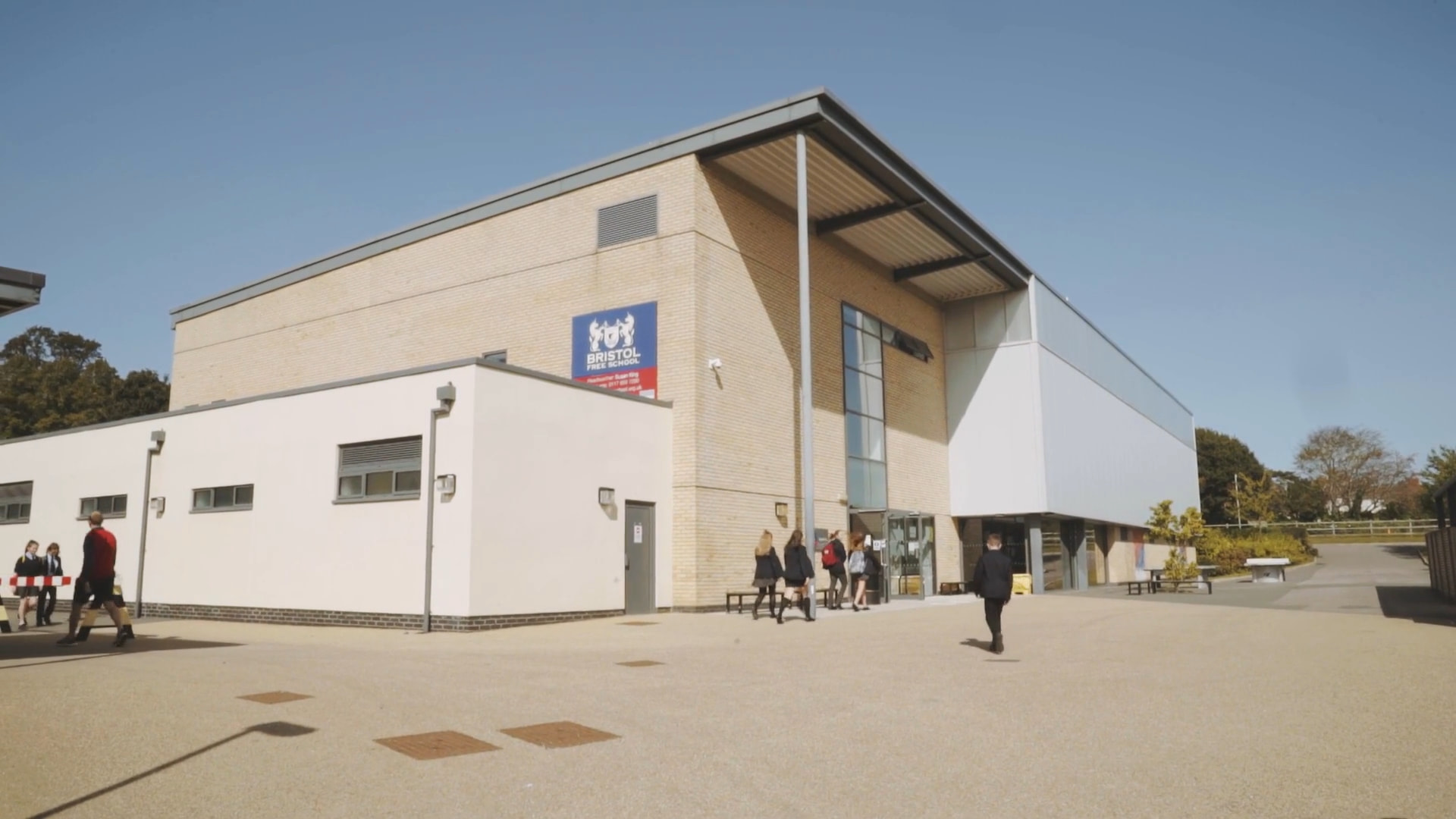
Bristol Free School is a friendly, well-disciplined and well-organised community, in which every child can thrive.

Bristol Free School,
Concorde Drive,
Bristol BS10 6NJ
© Copyright Bristol Free School 2011-2026 • Russell Education Trust
website design by Knox